The PulseSensor Kit, now with a TPU Stabilizer Ring
THE EASY-TO-USE HEART RATE SENSOR & KIT
Explore heart-rate monitoring and biofeedback creatively with the PulseSensor Kit. Perfect for students, artists, and developers of all skill levels.
Now includes the TPU Stabilizer Ring — for steadier readings, right out of the box.
✓ Easy to Use for Beginners
✓ Versatile for Advanced Projects
✓ TPU Stabilizer Ring Included
✓ 2-Year Warranty
What's In The Box
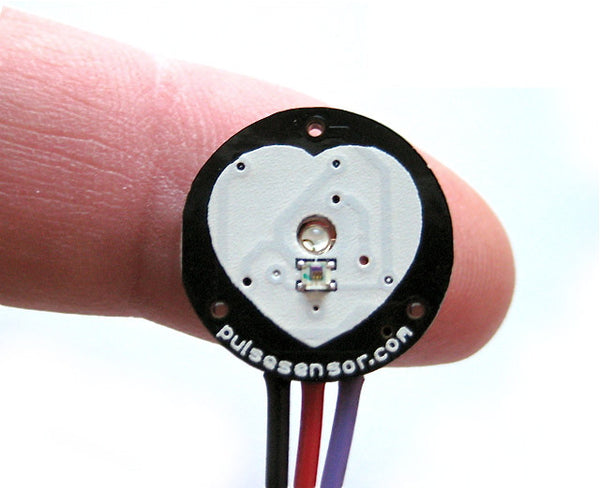
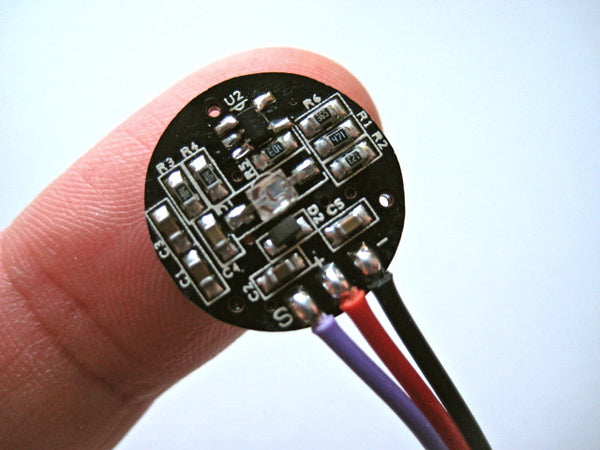
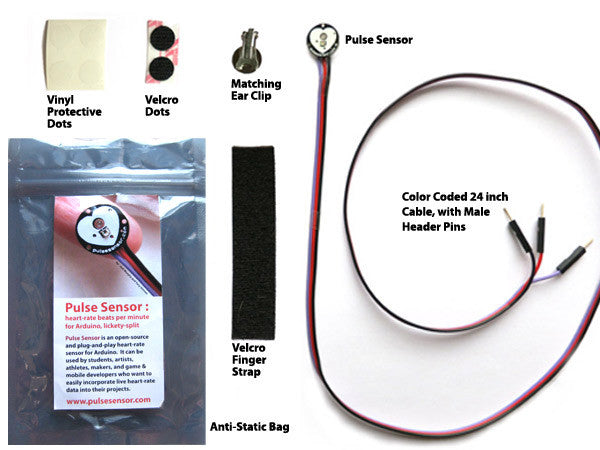
- PulseSensor Hardware: The heart of the kit with built-in amplification
- Premium Braided Cable: 26 gauge wires, 24 inches (610mm) with PVC insulation
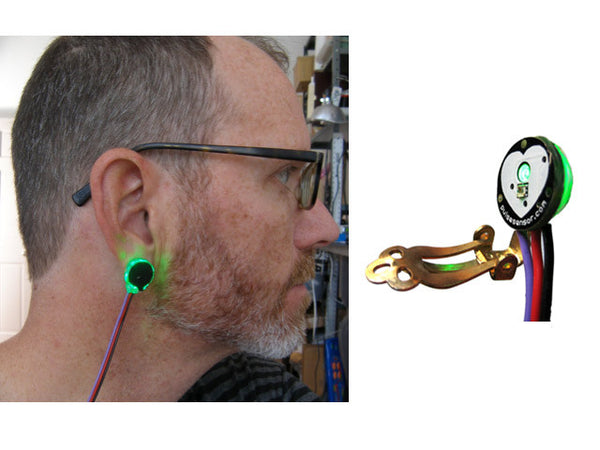
- Ear Clip: For alternate placement options
- Velcro Finger Strap: Professional-grade for secure attachment
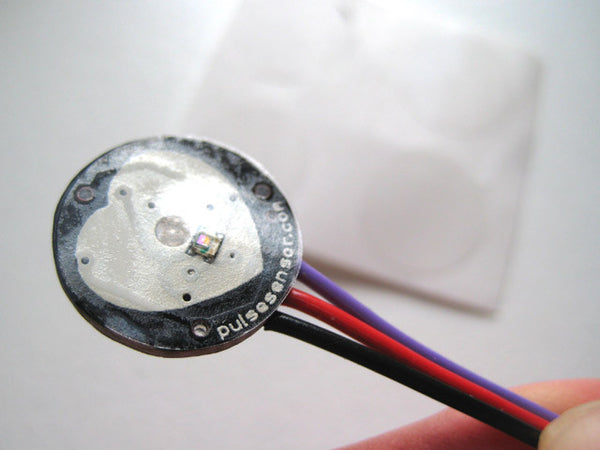
- Transparent Vinyl Dots: For electrical insulation
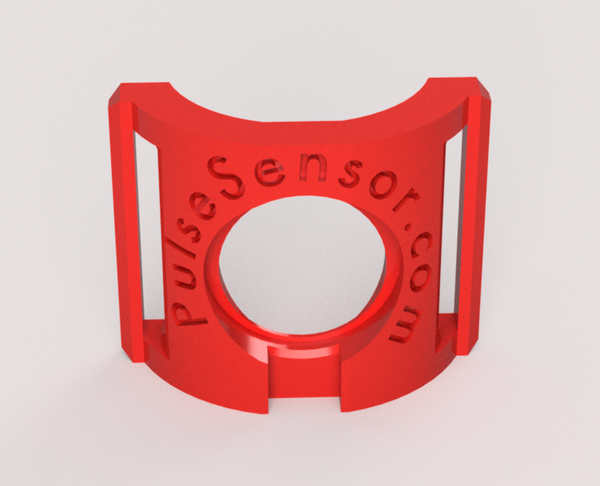
- TPU Stabilizer Ring (new): Flexible, custom-fit ring for steady readings (color may vary: white or gold)
Why the Stabilizer Ring Matters
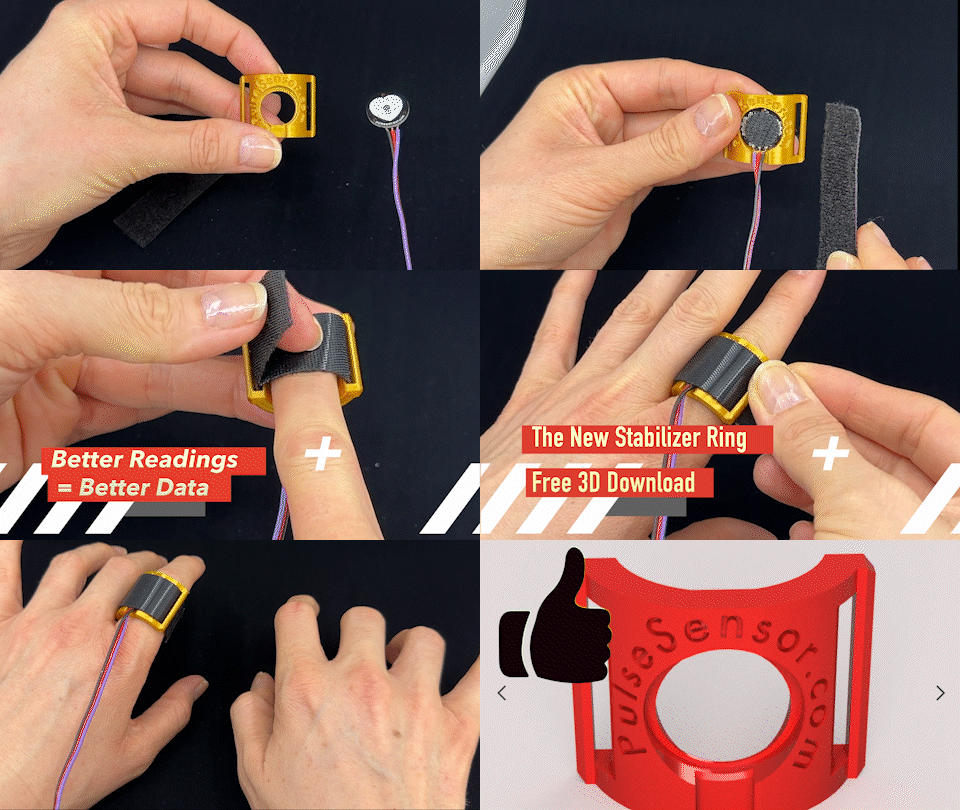
More stability = better readings. The PulseSensor is incredibly sensitive — usually a good thing, but small movements can throw your data into chaos. The TPU Stabilizer Ring is a knuckle-sized, custom-fit piece that minimizes motion artifacts and elevates your pulse readings from good to great.
Comfort and free fingertips. Wear it like a ring and you can still code, craft, and create with your fingertips. Better data, better comfort, no compromise.
How It Works
The PulseSensor snaps into the Stabilizer Ring's cut-out. Then, use the included Velcro Finger Strap to secure it for a sturdy fit. That's it — you're ready to read your pulse.
Key Features
- Stabilizer Ring Included: The TPU Stabilizer Ring keeps the sensor comfortably and securely in place during movement, reducing noise and improving data quality.
- Reliable and Durable Design: Built with high-quality materials, ensuring consistent performance and backed by a 2-year hardware warranty against manufacturing defects.
- Plug-and-Play Convenience: Jumpstart your projects with ease, thanks to its user-friendly interface compatible with Arduino, ESP32, micro:bit, and more.
- Comprehensive Project Support: Extensive tutorials and code examples are available, with ongoing software updates and support via GitHub throughout the product lifecycle.
- Versatile Applications: Ideal for wearable health monitors, interactive art installations, and educational projects.
- Hardware and Software Harmony: Comes with a robust library for seamless integration and a wide range of software support, making it ideal for both novice and experienced users.
- Enhanced User Safety: Designed with safety in mind, featuring skin-friendly materials and easy insulation methods for reliable long-term use.
- Innovative Design: Features like sewing holes make it perfect for wearable projects, and its transparent vinyl dots ensure easy and safe electrical insulation.
Technical Specifications
| Parameter | Min | Typ | Max | Unit |
|---|---|---|---|---|
| Operating Temperature Range | -40 | +85 | °C | |
| Input Voltage Range | 3 | 5.5 | Volts | |
| Output Voltage Range | 0.3 | Vdd/2 | Vdd | Volts |
| Supply Current | 3 | 4 | milliamps |
Physical Dimensions
PulseSensor: Diameter 15.8mm (0.62 inch) | Thickness 3.5mm
TPU Stabilizer Ring: Sized to fit comfortably around a finger knuckle
Pin Out / Connector Configuration
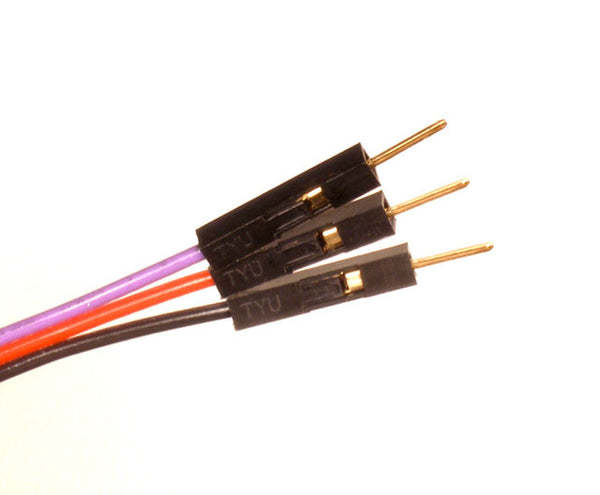
The PulseSensor comes with a 3-cable ribbon cable terminating in a male header. The pinout is as follows:
- Purple Wire = Analog Pulse Signal (Vdd/2)
- Red Wire = Vdd, Power with 3V or 5V
- Black Wire = Ground
Important Setup Information
The PulseSensor will not work correctly without insulating the front and back of the circular circuit board with the included kit components. Some user preparation is required:
- Start by insulating the front from the user's skin with the transparent Vinyl Dots.
- Insulate the back from any human skin and any electronically connective material by putting velcro backing on the back of the printed circuit board.
You can wear the sensor using the included Velcro Strap, the included TPU Stabilizer Ring, or attach it to the included ear clip with hot glue.
Compatibility
The PulseSensor outputs a clean analog signal — it works with any board that has an analog input pin (ADC). That's a lot of boards. Here are the popular ones we actively support and have example code for:
Most Popular Today
- Seeed XIAO ESP32-S3 — Our current go-to. Tiny, cheap, WiFi + Bluetooth, dual-core. Full XIAO ESP32-S3 tutorial →
- Arduino UNO R4 (WiFi and Minima) — The modern UNO. 12-bit ADC, native USB.
- Arduino UNO R3 — The classic, still works perfectly.
- Raspberry Pi Pico / Pico W / Pico 2 — RP2040/RP2350. Cheap, fast, great for students.
- ESP32 family — Original ESP32, ESP32-S2, ESP32-S3, ESP32-C3. Built-in WiFi for streaming heart rate to your phone or laptop.
- BBC micro:bit V2 — One-line MakeCode block. Great for classrooms. micro:bit tutorial →
Arduino Boards
UNO R4 (WiFi/Minima), UNO R3, Mega 2560, Leonardo, Due, Nano, Nano Every, Nano 33 IoT, Nano 33 BLE, Nano 33 BLE Sense, Nano ESP32, Nano RP2040 Connect, MKR family (WiFi 1010, NB 1500, WAN 1310, Zero), Portenta H7, GIGA R1 WiFi, Lilypad USB, Pro Mini, Micro.
Adafruit Boards
Feather ESP32-S3, Feather RP2040, Feather M4 Express, Feather M0, QT Py ESP32-S3, QT Py RP2040, Metro ESP32-S3, Metro M4, ItsyBitsy M4, ItsyBitsy RP2040, Circuit Playground Express, Circuit Playground Bluefruit, Trinket M0, Gemma M0.
Seeed Studio Boards
XIAO ESP32-S3, XIAO ESP32-C3, XIAO ESP32-S3 Sense, XIAO RP2040, XIAO RP2350, XIAO nRF52840, XIAO SAMD21.
SparkFun Boards
RedBoard Plus, RedBoard Artemis, Thing Plus ESP32-S2/S3, Thing Plus RP2040, Pro Micro RP2040, Pro Micro ESP32-C3, Qwiic Pro Micro, MicroMod ecosystem.
Raspberry Pi
Raspberry Pi Pico, Pico W, and Pico 2 work natively (3 ADC pins on board).
Raspberry Pi 4 / 5 / Zero 2 W need an external ADC — we recommend the MCP3008 or ADS1115. Raspberry Pi tutorial →
Coding Environments
We have working example code for Arduino IDE, PlatformIO, MicroPython, CircuitPython, MakeCode (micro:bit), and Processing.
Don't see your board? If it has an analog input pin, it works. Check our PulseSensor Playground GitHub for the latest examples, or email support@pulsesensor.com.
Code Library & Tutorials
The PulseSensor Playground Library is available right inside the Arduino IDE — install it from the Library Manager and you're ready to go. Code examples include:
- Basic BPM monitoring
- ESP32 and XIAO ESP32-S3 wireless dashboards
- nRF52 BLE Heart Rate Monitor (works with Apple Health, Strava, etc.)
- Servo control based on heart rate
- Audio feedback with a speaker
- Pulse Transit Time (PTT) and Heart Rate Variability (HRV)
- And much more!
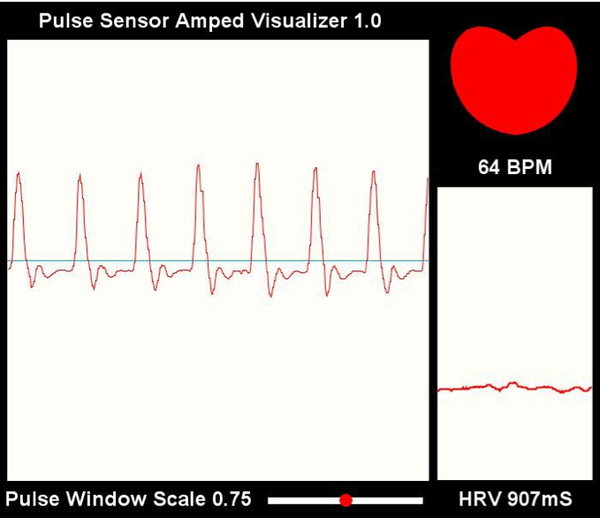
Try our WebSerial Dashboard for instant heart-rate visualization in Chrome — no software install needed. Or build a wireless monitor with the XIAO ESP32-S3 WiFi Dashboard tutorial.
Free 3D Printable Accessories
Get even more out of your PulseSensor with our free downloadable designs:
- Table Top Holder and Light Shield: Enhance stability and reading accuracy for desktop work
- Stabilizer Ring STL: Print spare or extra rings (one is already included in your kit)
3D print your own today!
Join the Community
Become part of a growing community of enthusiasts and professionals who are pushing the boundaries of heart-rate technology and biofeedback. Share your projects, get inspired, and collaborate with a global network.
Warranty & Compliance
- 2-year hardware warranty against manufacturing defects (PulseSensor hardware)
- Certified as Open Source Hardware (OSHW US000075)
- "PulseSensor.com" is a registered trademark of World Famous Electronics LLC. NY, USA
Product Information
- Manufacturer: World Famous Electronics LLC, New York, USA
- Designed in New York City
- Made in Taiwan
- UPC: 864620000204
Sales Policy
This item is an open-source electronic sensor for developers. We guarantee the quality. All sales are final. Defective items will be replaced within 30 days of sale.